Updates

Ernie’s letters home

In 1944, during the height of WWII, air mail letters (often called aerogrammes or “Air Letters”) were lightweight, self-sealing stationery, frequently using thin blue paper to save weight on aircraft. These letters often featured military censorship, six-cent or six-pence postage rates, and were vital for connecting soldiers with their families.

Design & Usage: Air Letters (often called V-Mail or “Airgraphs” in earlier years) were introduced to reduce the weight of mail, where the letter sheet folded into its own envelope.

Military Mail: Many 1944 letters were “Postage Free” for soldiers or used six-cent red airmail stamps on blue envelopes.

Censorship: Almost all military letters in 1944 were censored, featuring a censor’s stamp and initials.

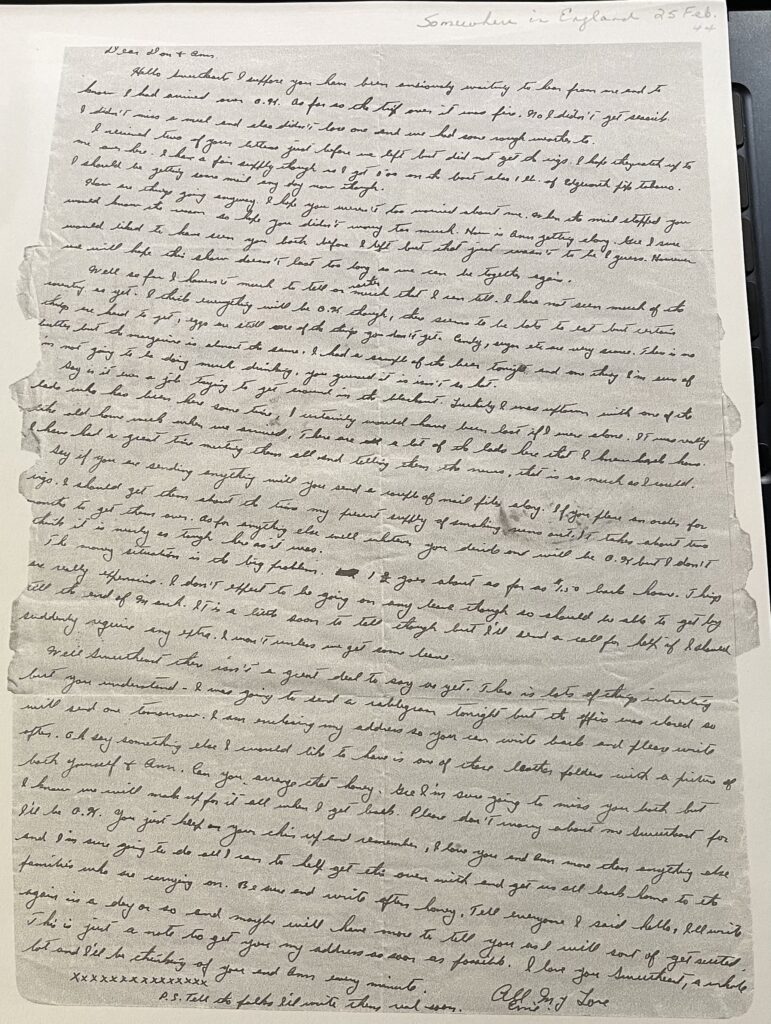
His first letter after arriving in England.

February 25, 1944. He always signed his letters “All my love, Ernie.”
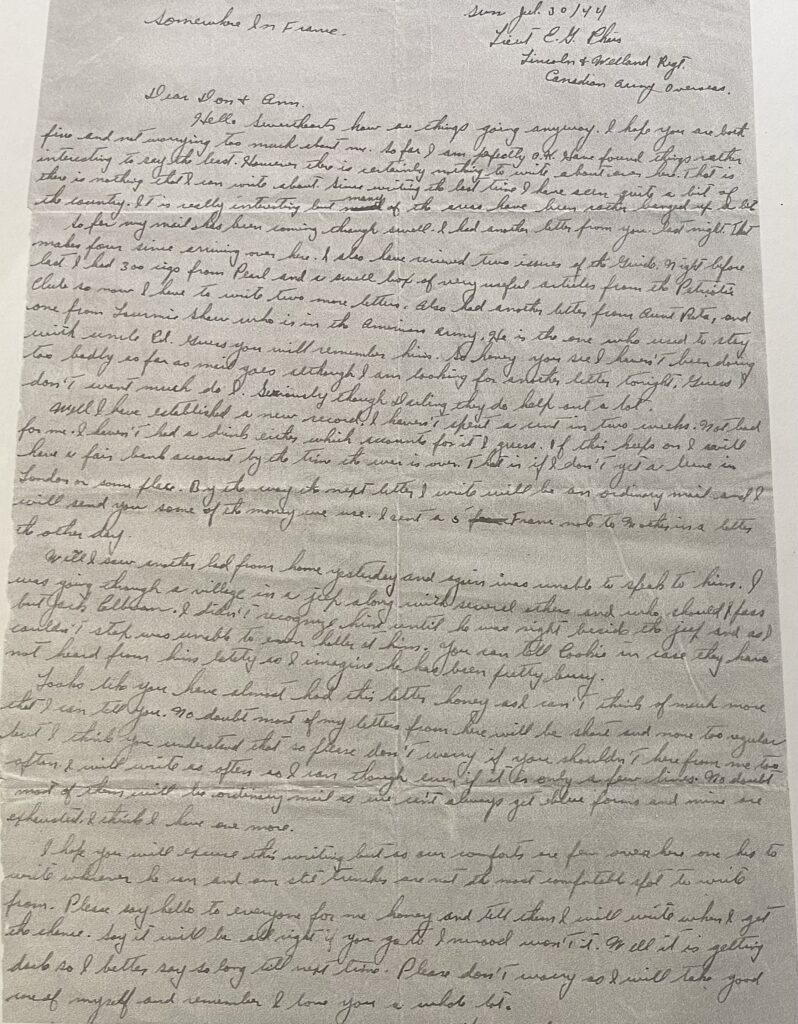
His last letter home

July 30, 1944.
First edition released

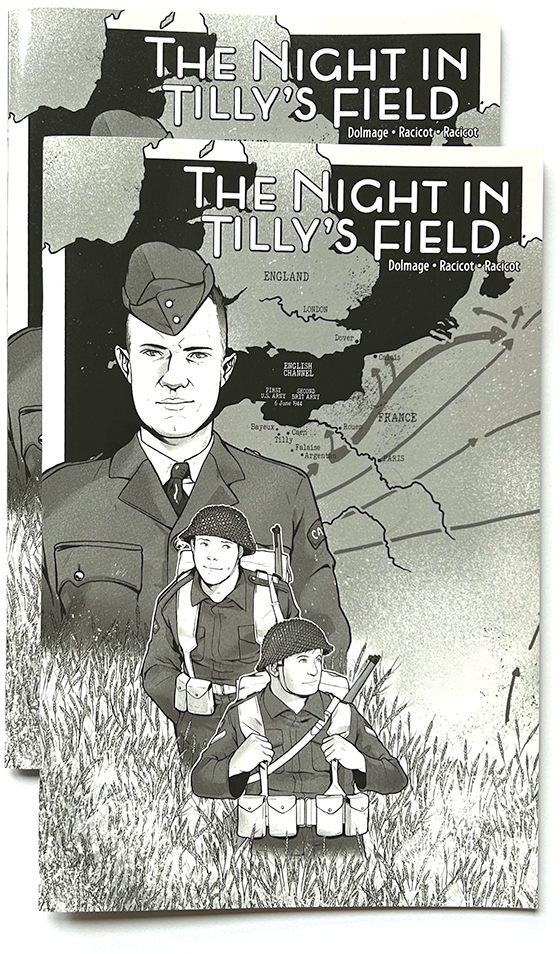
We just got the first edition of the The Night in Tilly’s Field back from the printers . . . but only 100 copies to start.

Our intention is to first get it out to the families of Ernie Phair, Arkle Dunlop, Bert Hearnden, Murray Reid, John MacLean, and Jim Dolmage—the people who have helped us so much with this project.

But our hope is to then distribute it to a wide spectrum of readers—with a focus on teenagers—because we feel their feedback is important to correct any errors we may have made and for suggesting improvements for future releases.

Graphic novelists craft the true story of an Ontario soldier who never came home

By Jeff Outhit / Waterloo Region Record

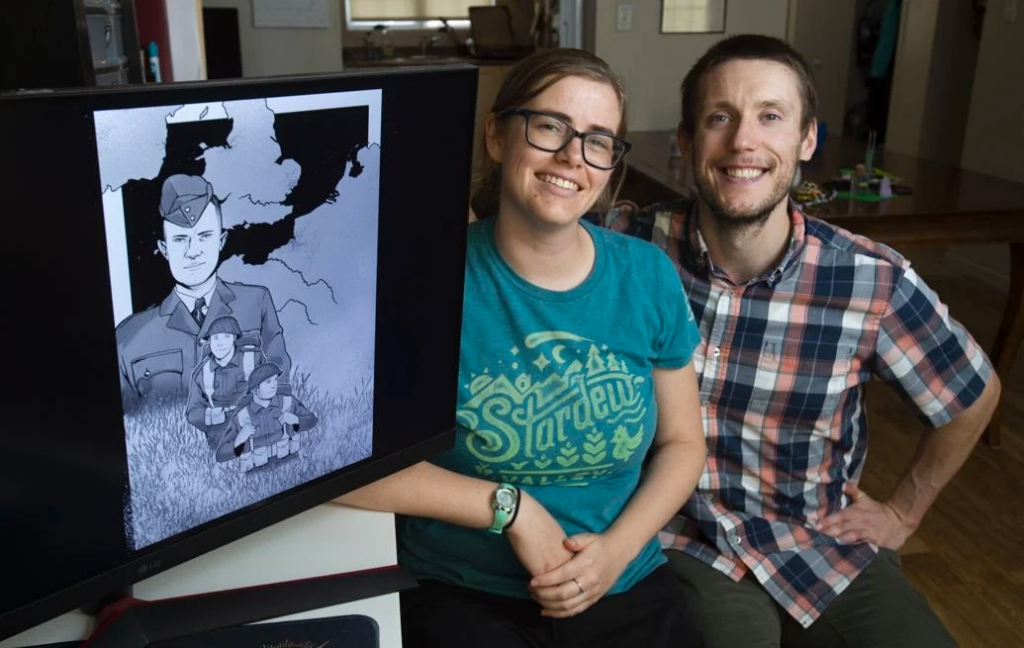
Artists Alaire and Toben Racicot are stepping outside the world of fantasy to create a graphic novel about something true: the story of a soldier who died in the Second World War.

Ernie Phair was a machine operator, husband and new father who enlisted in 1941. By 1944, he was an infantry lieutenant, aiming to lead his men as best he could to help liberate Europe from Nazi tyranny.

“I didn’t want to do a typical story of him being this kind of Captain America figure because I don’t believe that is what soldiers do. They all kind of contribute to one another’s success,” said Toben, a writer.

Alaire and Toben Racicot. Photo by Mathew McCarthy.

“We don’t want to focus on the pain and suffering that these soldiers went through. We want to focus on the characters,” said Alaire, an illustrator.

The Waterloo couple hopes their 32-page graphic novel will connect in a fresh way with students and others, to help them explore the cost of freedom and what it means to remember.

➤ Read the full article