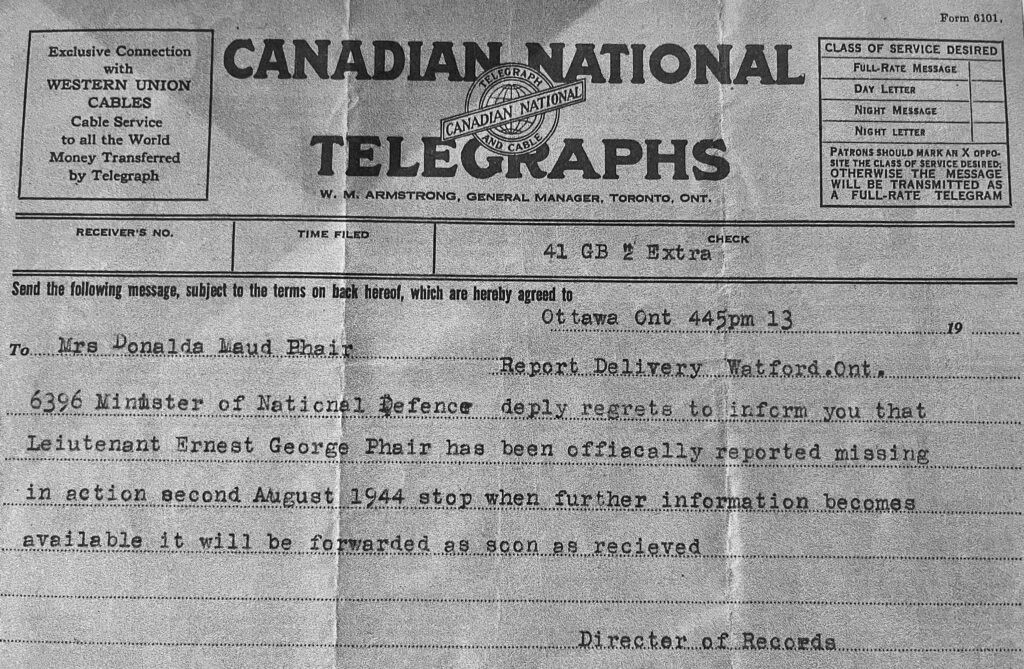
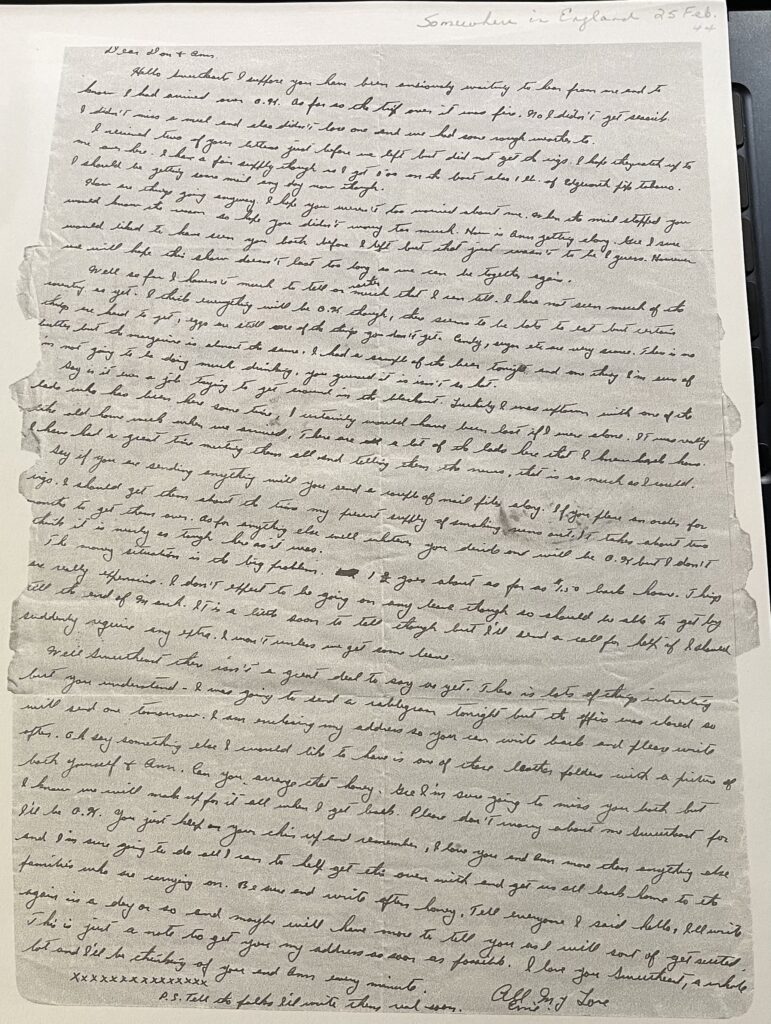
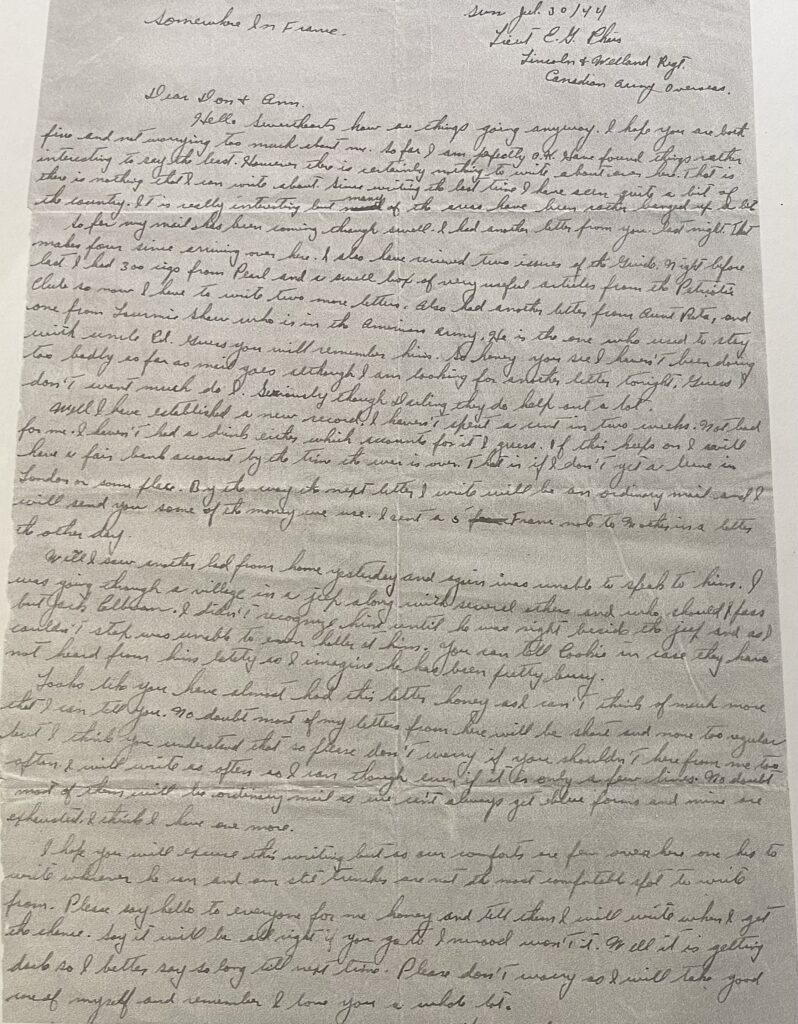
A close reading of the dedication in The Night in Tilly Field may have left you wondering how my uncle, Ernie Phair, came to have a different last name from his brother Alvin Sharp. And so, here is that story.
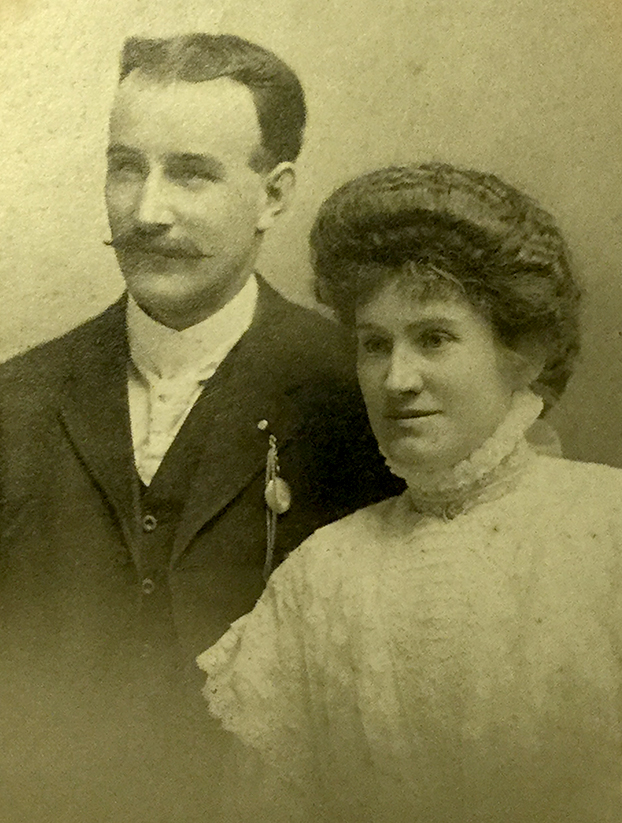
Ernest George Sharp was born on March 28, 1913, the younger brother of Marguerite Etoile Sharp (born in 1909) and Alvin Kay Sharp (born in 1911.) Two weeks later, his mother (my grandmother) Nettie Sharp died.
My grandfather, Thomas Sharp, was left with two small children and a new baby to care for. Thomas was a carpenter and a blacksmith, who had shops in Hensall and later Seaforth, Ontario. However, when winter came, he would travel north to more lucrative work in the lumber camps, where he would live from November until April, leaving the children with Nettie.
Until Thomas remarried—three years later after Nettie’s death—his siblings looked after Marguerite and Alvin, while Thomas travelled for work; and the baby, Ernie, was placed in the care of the welcoming Phair family in Watford, Ontario, who had no children.
By 1917, Thomas Sharp had remarried and moved away from Watford with his new wife and his two older children. They eventually settled in Seaforth, where two more children were added to the family. In those days, the travel between Watford and Seaforth was difficult, and so the Phairs and the Sharps lost contact, and young Ernie grew up not even knowing he had any siblings.
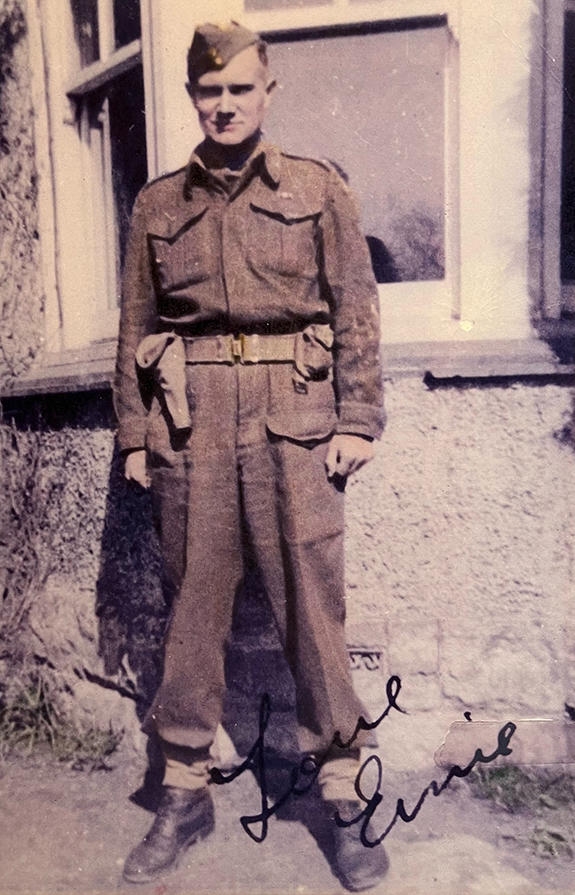
Still, while Ernie was raised by the Phairs, his father never allowed him to be formally adopted, so, when he signed up for the army in 1940, he discovered his true birth name and took his wife Donalda and their daughter Ann to reconnect with his siblings and their families—the Sharps and the Dolmages—not long before he headed off to war.
My Mother kept a picture of Ernie in our living room. All she knew about Ernie dying in the war was that it had happened near Caen. Neither she nor Ernie’s family knew any details.
When news came that Ernie had been declared missing, his army pay was cut off, and Mutual Life would not pay his life insurance policy, and Donalda and Ann had to stay with our family in Kitchener for several weeks. It wasn’t until a year later, when the POWs were released and came home to confirm that Ernie had indeed been killed in battle, that his back pay was released to his family.