
Information for The Night in Tilly’s Field was attained through video recordings, in-person discussions, and written correspondence with surviving members of the Lincoln and Welland Regiment, who were all front-line soldiers near Tilly-la-Campagne on August 2, 1944. Most of the dialogue used in the book is from actual quotes taken during these interviews.
Because everyone deals with the memory of traumatic events differently, we are especially grateful for those who shared their histories and informed the creation of this work.
Lieutenant Ernie Phair
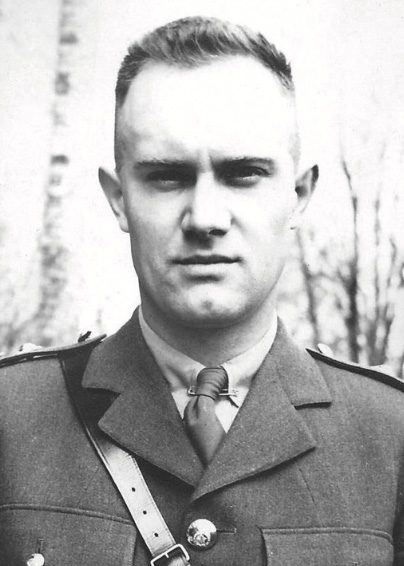
Ernie Phair enlisted in 1940, at the start of the war. He was married at the time and working at the Andrews Wire Works factory in Watford, Ontario. His daughter, Ann, was born that year. Ernie started as a Private, but eventually worked his way up to Lieutenant, a testament to his abilities and his work ethic, since most officers at the time assumed their status because of their higher education or their connections. Ernie was 31 years old when he died at Tilly on August 2, 1944. His daughter was four. His dream had been to come home and take up the family farm. ➤ Learn more about Ernie Phair
Lieutenant Arkle Dunlop
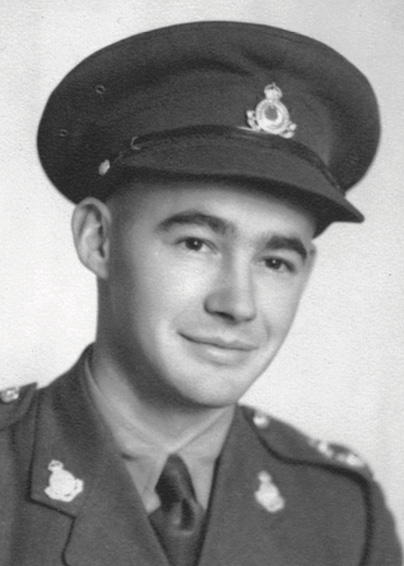
Arkle Dunlop left his law practice in Markdale, Ontario to enlist. He was Ernie’s closest friend in England as they trained together for several months, preparing for the invasion of Europe. He was a true Canadian hero—wounded three times and returning to the front after each recovery. He engaged in several very significant battles and was awarded the Croix de Guerre by the French government for his heroic deeds. On one occasion, he refused an order to attack a German position, because no artillery or air bombardment had taken place—a lesson learned from Tilly. Arkle was a survivor who relished his participation in the war and was happy to share his experiences, including some that usually never get talked about. After the war, he returned to his law practice in Markdale. ➤ Learn more about Arkle Dunlop
Corporal Bert Hearnden
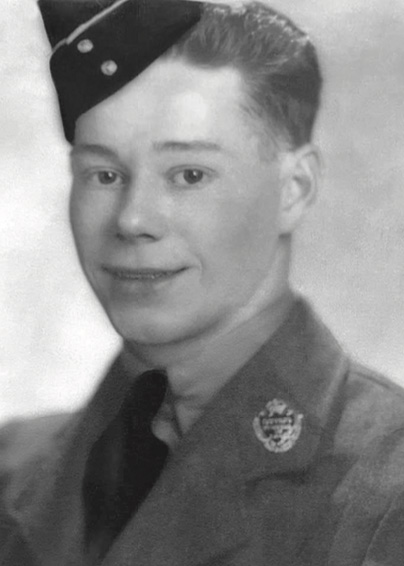
Bert Hearnden grew up in Toronto and, after high school, worked at his family’s printing business. He was 21 years old when he was taken POW and then shipped to different camps in Germany. He had shared his war experiences with his family before and even kept a map showing those POW camps, but during our interview he broke into tears saying, “You know, they just kicked the shit out of us that night.” After the war, Bert moved to Winnipeg to get married, and eventually retired there as a Vice President of Sinclair and Valentine Publishers. ➤ Learn more about Bert Hearnden
Corporal John MacLean
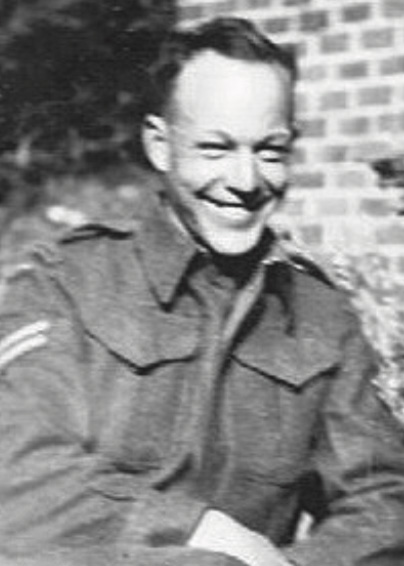
John MacLean was married and living in New Brunswick, before he went off to war in 1942. He joined the Lincs as they trained in Newfoundland, before being sent to Scotland for more training. (The first Linc soldiers were actually killed in Scotland when a German rocket hit a mess tent there.) John spent that night in the wheat field at Tilly and was taken prisoner. In the process of researching this book, I had posted an ad in the Canadian Legion News, looking for WW II soldiers who had served with Ernie and received an anonymous note stating that “the passage of sixty years has not dulled the horrific memories of time.” John gave his son permission to get in touch only after he had passed away, which is how I learned that it was he who had sent me that note, and also how I got this photograph. ➤ Learn more about John MacLean
Private Murray Reid
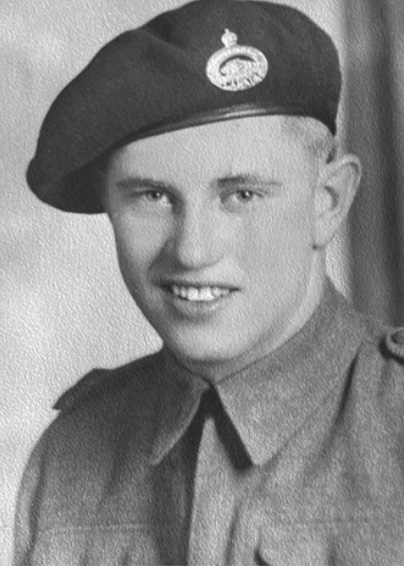
Murray Reid had just turned 19 when he was captured that night in Tilly’s Field. Afterwards, he was forced to work in German cities that were constantly being bombed by the Allied Air Forces. He witnessed first hand the suffering of the German women, children, and old people who had been left behind in the cities; and he had a real sympathy for their plight. As in most wars, many more civilians were killed than soldiers in WW II. Murray returned to his hometown of Wheatley, Ontario, and worked in the Windsor Chrysler plant. He had a talent for restoring the muscle cars of the 1960s and continued to do so after he retired. Murray never talked to his family about his wartime experiences, but he did keep the key to that German officer’s bucketcar in his attic. ➤ Learn more about Murray Reid